
How to Care for and Frame Limited Edition Art Prints: A Collector's Guide
A limited edition print is only ever as valuable as its condition. Two impressions from the same edition can sell years later at very different prices, and the difference almost always comes down to how they were framed, hung and looked after. The good news is that protecting a print is not complicated. This guide covers everything we recommend to collectors at Dane Manor Fine Art, from the moment your artwork arrives to the day you might pass it on.
When your artwork arrives
Unpack on a clean, flat surface and keep the packaging until you are happy with the piece.
Check the artwork, frame and glazing straight away, and tell us immediately if anything looks wrong. Every Dane Manor order travels fully insured, and a quick report with photos makes any claim simple.
Put your Certificate of Authenticity and invoice somewhere safe and separate from the artwork. Together they are your proof of provenance.
Never remove publisher labels, edition stamps or paperwork fixed to the back of a framed piece.
Handling a print
Oils and moisture from skin mark paper permanently, sometimes only becoming visible months later. Handle unframed prints with clean, dry hands or nitrile gloves, hold them by the edges or by the backing board, and never touch the printed surface. Do not roll a flat print, and never fold it.
Framing: what actually protects your print
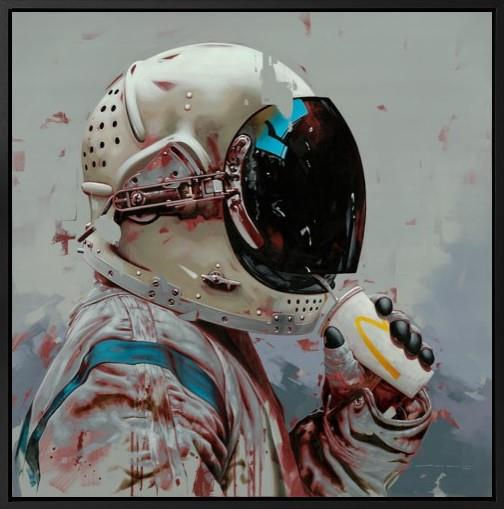
Many of the works we sell, including pieces by Ben Jeffery and The Trunk Of Funk, arrive professionally framed by the publisher. If yours did, the framing is part of the piece and is best left as it is. For unframed prints, these are the choices that matter:
UV-filtering glazing. Light is the biggest long-term threat to colour. Conservation-grade glass and acrylic block up to 99% of UV rays (Tru Vue). Anti-reflective museum glass adds near-invisible clarity for pieces opposite windows.
Acrylic for large or high pieces. It is lighter and safer than glass for big works or busy areas, but it scratches more easily and must never be cleaned with ammonia-based products.
Acid-free mount board and backing. Standard card turns acidic and stains paper brown over time. Ask your framer for conservation or museum-grade board.
Reversible hinging, never glue or tape. A print should be hinged with archival tape or Japanese paper hinges so it can be removed without damage. Dry-mounting a limited edition destroys much of its collectable value.
Space between print and glass. A mount or hidden spacer stops the paper touching the glazing, where condensation can cause sticking and mould.
Where to hang it
The right wall matters as much as the right frame. We cover this in more detail in Before You Hang the Art, but the essentials are:
Keep artwork out of direct sunlight, even behind UV glazing.
Avoid bathrooms, kitchens, conservatories and walls above radiators or fireplaces, where heat and humidity swing daily.
Be wary of cold external walls in older houses, which can hold damp behind a frame.
Aim for a steady room: moderate temperature and roughly 40 to 60% relative humidity suits paper and canvas alike.
Use the right fixings
Large framed works can be heavier than they look. A deluxe piece measuring well over a metre needs two-point hanging on D-rings and fixings rated for the weight and the wall type. A single picture wire on one nail is a common cause of avoidable damage.
Cleaning
Dust frames with a soft, dry microfibre cloth.
For glass, spray cleaner onto the cloth, never directly onto the glazing, so liquid cannot seep under the frame edge.
For acrylic, use a dedicated acrylic cleaner or just a damp cloth.
Never clean the artwork surface itself. For textured, gold-leaf or embellished works, a very soft brush is the most you should use.
Storing art you are not displaying
Store prints flat in an archival portfolio or box, interleaved with acid-free tissue, in a room you live in. Lofts, garages and cellars are the worst places for art: temperature and humidity change too much. Framed pieces should stand upright, separated by card corners, never leaning glass to glass.
Paperwork and insurance
Keep your certificate, invoice and a set of good photographs together, and add higher-value pieces to your home insurance as specified items. Should you ever decide to sell, a complete paper trail and good condition make a real difference to what a buyer will pay. Our guide to what a Jack Vettriano print is worth explains how condition and provenance feed into price.
When to call a conservator
Brown spotting (foxing), rippling paper (cockling), mould or water damage all need a professional. Do not attempt a home fix. In the UK, the Institute of Conservation's Conservation Register lists accredited paper and paintings conservators.
Questions about a piece?
If you are unsure how to frame or hang something you have bought from us, get in touch through our contact page and we will help. You can also browse the full gallery or read our frequently asked questions.


Comments