
What Is an Artist's Proof? A Guide for Print Collectors
An artist's proof is one of a small number of prints produced alongside a limited edition but kept apart from the main numbered run. You will usually see it marked "AP" or "A/P" in the margin instead of a standard edition number. Proofs share the same printing and materials as the edition itself, so what sets them apart is their rarity rather than their quality.
A short history of the artist's proof
Before modern printing, making an edition was a slow, manual process. Printmakers would run off trial sheets to judge the colour, the tone and the alignment of each layer before committing to the full edition. Once the artist was happy, some of those approved sheets stayed in the studio rather than going on sale.
Over the years the term moved away from trial sheets. Today, when a publisher releases a limited edition, the artist's proofs are usually a fixed, declared allocation. They come off the same run, on the same paper and with the same inks as every numbered print. The only real difference is how they are labelled and how few of them exist.
How to read the markings
Numbered prints
A standard limited edition print carries a fraction, normally written in pencil. The top figure is the individual print and the bottom figure is the size of the main edition. Our complete guide to collecting limited edition prints explains this numbering in more detail.
Artist's proofs
On a proof, that fraction is replaced by "AP" or "A/P". Some proofs also have their own small number, such as AP 1/10, which tells you where that sheet sits within the proof group. In either case, proofs are counted separately from the main edition.
Reading an edition description
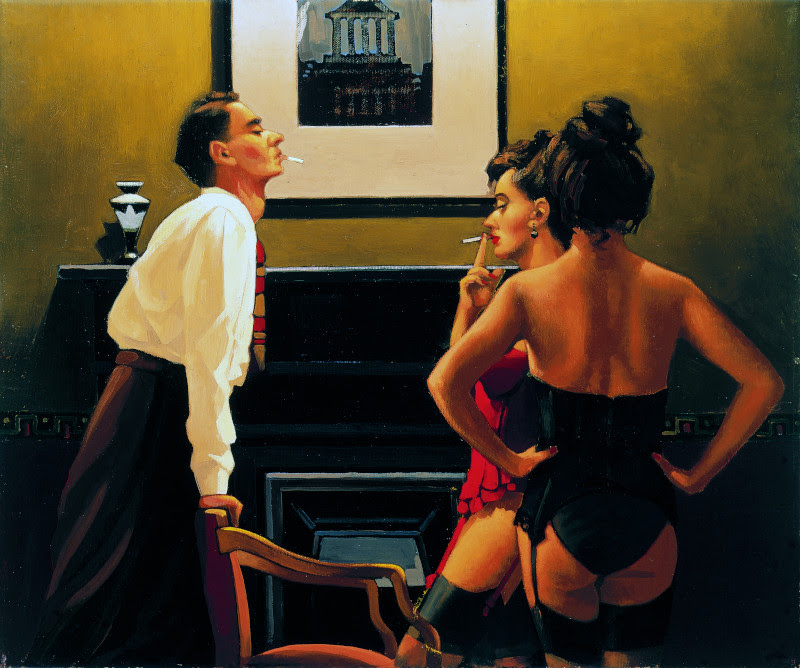
Publishers often describe an edition in two parts. Jack Vettriano's Master of Ceremonies, for instance, is an edition of 100 plus 10 Artist's Proofs. That means 110 prints in total, of which only ten carry the AP mark. Once you can read a description like this, you know exactly how scarce your print is.
Why many collectors prefer a proof
Fewer of them exist
In an edition of 100 with 10 proofs, the proofs are outnumbered ten to one. When an edition has sold out from the publisher, any proof that changes hands later is a rare sight.
A closer link to the artist
Because proofs began as the artist's own share, many people feel they carry a little more of the artist's personal connection to the work. That is a feeling rather than a fact, but it is a big part of why proofs are sought after.
A word on value
Rarity can make a proof more desirable, but it does not guarantee anything. Demand for the image and the artist usually matters more than the AP mark alone, and values can fall as well as rise. Our article on whether limited edition art is a good investment looks at what tends to hold value across different artists.
Artist's proofs across our collection
Proofs are not limited to one name. Here are some we have featured at Dane Manor.
Jack Vettriano, Night Calls. We wrote about an Artist's Proof numbered 1/10 in our post on Night Calls by Jack Vettriano, which shows how a proof is presented and documented.
Jack Vettriano, Master of Ceremonies. An edition of 100 plus 10 Artist's Proofs, with an image size of 32.3 x 39 cm. It is supplied mounted, with a mount measuring 60 x 55.3 cm. At the time of writing, Master of Ceremonies is listed at £465.
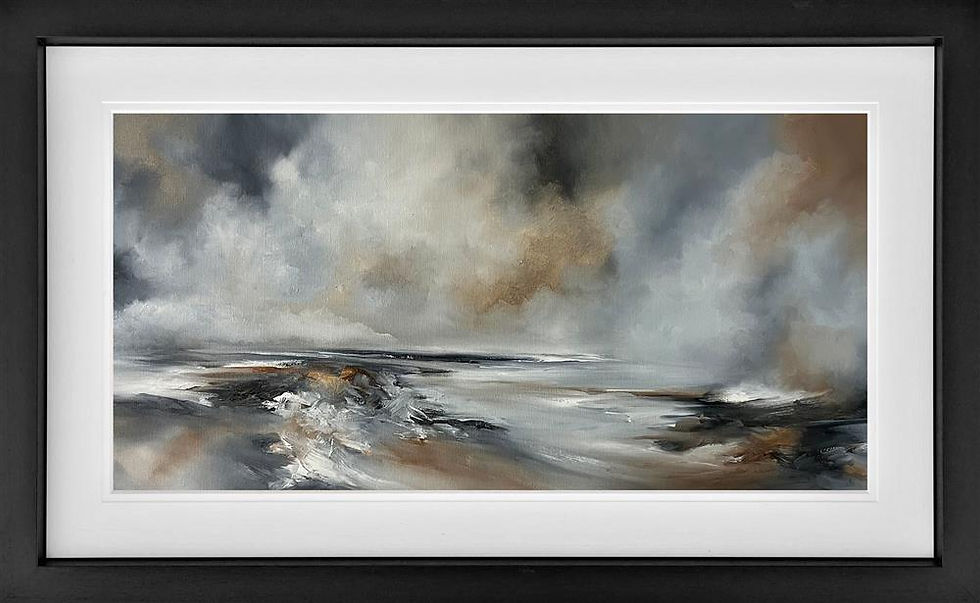
Leanne Christie, Wild Rainbow Artist Proof. A vivid piece combining oils with glitter and gems, with an image size of 43 x 66 cm and a framed size of 58 x 81 cm. At the time of writing, Wild Rainbow Artist Proof is listed at £468. Leanne Christie's Country Fusion is also available as an Artist Proof.
If you collect Vettriano in particular, our sister site has more on his limited editions.
What to check before buying a proof
The same simple checks apply, whoever the artist.
The marking. Look for AP or A/P in the margin in place of a standard edition number.
The edition details. Confirm that proofs were part of the official release. A sheet marked AP from an edition that had none should ring alarm bells.
The paperwork. A Certificate of Authenticity accompanies every piece from Dane Manor, and its details should match the print in front of you.
The source. An established gallery or publisher can show you the history behind the print you are buying.
Frequently asked questions
Does an artist's proof look different from the numbered prints?
No. It shares the paper, inks and print run of the numbered edition. Only its label and its scarcity set it apart.
How many artist's proofs are there in an edition?
It varies by artist and publisher. Master of Ceremonies, for example, has 10 Artist's Proofs alongside 100 numbered prints. The edition size is listed on each of our product pages.
Will an artist's proof go up in value?
Scarcity can make proofs more desirable, but no print is certain to rise in value. Values can fall as well as rise, so buy a proof because you love it.
Do your artist's proofs come with a certificate?
Yes. Every piece we sell, proofs included, comes with a Certificate of Authenticity, and UK and international deliveries are fully insured.
Find your artist's proof
If you would like something a step rarer than a standard numbered print, start with Master of Ceremonies by Jack Vettriano or Leanne Christie's Wild Rainbow Artist Proof. Proofs are few by nature, so when one catches your eye, it is worth acting before it is gone.

Comments